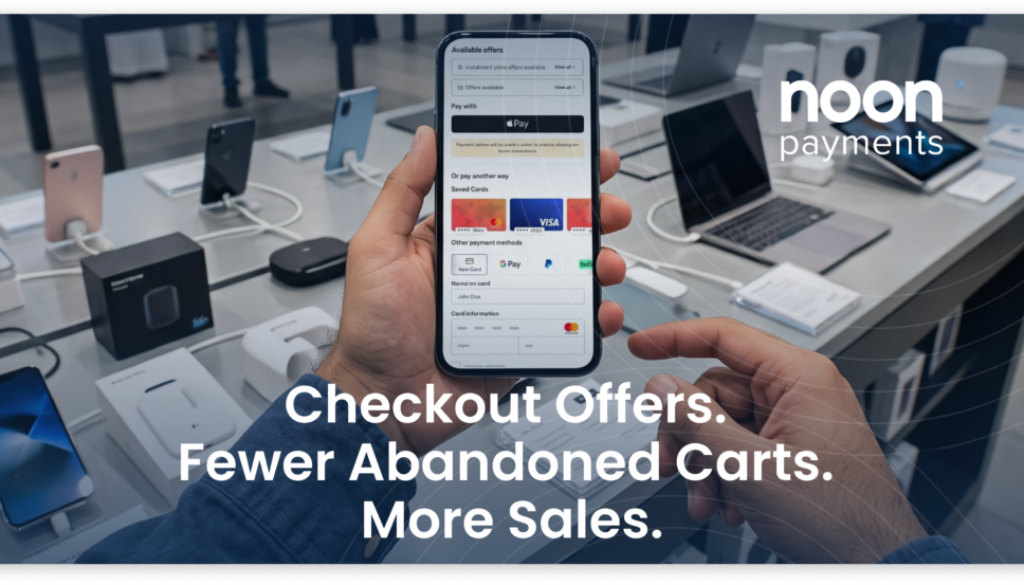
Checkout Offers: The Smartest Way to Recover Lost Sales
Most businesses spend heavily to get shoppers to their site: ads, influencer partnerships, email campaigns, social content. Far less attention goes to the moment that actually decides whether that spend pays off — checkout page. Treated as a formality, checkout page is often the weakest link in the funnel. Treated as an opportunity, it becomes one of the highest-return levers a business has.
The tool that makes the difference is the checkout offer: a relevant, well-timed incentive shown to a customer at the exact moment they’re deciding whether to complete a purchase. Done well, it doesn’t just rescue sales that were about to be lost — it lifts order values and shifts how customers choose to pay.
The Checkout Page Problem Businesses Can’t Ignore
Cart abandonment isn’t a rare glitch — it’s a familiar part of online shopping. Shoppers browse, fill their carts, and get all the way to the final step, only to leave without completing the purchase. For businesses, that means customers who were ready to buy slip away at the last moment.
The leading causes are largely fixable: unexpected extra costs at checkout page, a process that feels too long or complicated, and a lack of trust in how payment details are handled. Each of these is a moment where the right offer, and the right payment experience, can change the outcome.
Why Offers Work Better at Checkout Page Than Anywhere Else
1. It’s the moment of highest intent
By checkout page, the customer has already decided what they want. A relevant nudge — a small discount for paying with a specific method, on a digital wallet — is often enough to convert hesitation into a completed order.
2. It removes friction, not adds it
Generic discount codes ask customers to stop, search their inbox, and copy-paste before they can pay. Checkout offers that are automatically applied skip that step entirely, so businesses don’t lose sales to inconvenience alone.
3. It can be genuinely relevant, not generic
The strongest checkout offers are shaped by context: what’s in the cart, which payment method the customer is using, or whether they’re a first-time or returning buyer. A high-value cart might call for an instalment option; a first-time card user might respond better to a targeted discount.
4. It directly reduces abandonment
Price anxiety and last-minute hesitation are two of the biggest reasons carts get abandoned. A well-placed, clearly communicated offer addresses both — easing cost concerns and creating a reason to complete the purchase now rather than later.
5. It’s the only place to influence how customers pay
Businesses that want to grow adoption of a particular payment method — instalments, a digital wallet, a local payment scheme — have one real point of leverage: checkout page. Customers will often switch methods for a small, well-timed reward, and no other stage in the journey offers that kind of control.
Why So Many Businesses Still Don’t Use Them
If the case for checkout offers is this strong, the natural question is why more businesses haven’t built them into their process. In practice, three obstacles come up again and again:
Limited visibility into which offers, bank partnerships, or promotions a business is even eligible for.
Offers that exist on paper but require development time to actually integrate into checkout page.
Promotions managed across disconnected tools and teams, with no single source of truth — so campaigns get delayed or dropped altogether.
None of these are reasons to skip checkout offers. They’re reasons to choose a payment partner that removes the overhead.
Making Checkout Offers Practical, Not a Project
This is where the payment platform a business runs on matters. noon payments works with businesses across the UAE, Saudi Arabia, and Egypt to make checkout page less of a drop-off point and more of a conversion moment, by handling the pieces that usually stall an offers programmer:
Offer access: a clearer line of sight into partner and payment-method promotions, instead of businesses having to chase them down individually.
Faster integration: less reliance on scarce developer time to get an offer live at checkout page.
Centralized management: one place to plan and track promotions, rather than offers scattered across spreadsheets, emails, and separate tools.
The result is a checkout page experience where relevant, well-timed offers are the default, not a stretch goal for the next product roadmap.
What to Look for in a Checkout Offers Approach
Whether a business builds this in-house or works with a payment partner, a few things separate an offer that converts from one that gets ignored:
Relevance: the offer matches the cart value, product type, or payment method — not a blanket discount for everyone.
Visibility: the offer is clear and easy to understand at the exact point of payment, with no extra steps required.
Speed to launch: marketing and growth teams can test and adjust offers without waiting on a development cycle.
Measurement: it’s possible to see which offers actually move conversion rate, average order value, and payment method mix.
Conclusion
Acquisition costs keep climbing, and shoppers have less patience for friction than ever. Every stage of the funnel before checkout page is about earning attention. Checkout page is where that attention either turns into revenue or walks away. Businesses that treat it as an afterthought are leaving conversions, order value, and payment-method growth on the table — all at a stage they already have full control over.
FAQs:
What are checkout offers?
Checkout offers are discounts, or payment-method-specific incentives shown to a customer at the payment step, rather than earlier in the shopping journey. They’re typically applied automatically, based on the cart, the payment method chosen, or the customer’s purchase history.
Do checkout offers actually reduce cart abandonment?
They can. A large share of cart abandonment is driven by cost concerns, hesitation, or last-minute friction — all of which a relevant, clearly presented offer at checkout page is well positioned to address, since it appears at the exact moment a customer is deciding whether to complete the purchase.
How do I know which offers my business is eligible for?
This is usually the first barrier businesses hit — offers from banks and payment partners aren’t always easy to discover on their own. Working with a payment platform that maintains these partnerships, such as noon payments, gives businesses visibility into relevant offers without having to track each one down individually.
Do I need developers to launch checkout offers?
Not necessarily. Building offer logic directly into a checkout page traditionally required development time, but low-code and no-code approaches now let marketing and growth teams launch and adjust offers without waiting on a dev cycle.
Can checkout offers change which payment methods customers use?
Yes. Checkout page is the one point in the journey where a business can directly influence payment behavior in real time. A targeted incentive — for instalments, a digital wallet, or a specific card — can shift how customers choose to pay, provided the reward is clear and relevant enough to prompt the switch.
Get notified with blog updates