
Refund vs Reversal Transactions Explained: Key Differences Every Merchant Should Know
Understanding the difference between a refund and a reversal transaction is crucial for merchants working with noon payments and operating in the UAE, KSA, and Egypt. This knowledge helps improve customer satisfaction and payment operations.
Why Every Online Merchant in the UAE, KSA & Egypt Needs to Know This
The digital payments space has surged in the Middle East, fueled by e-commerce growth and mobile wallets. With platforms like noon payments, acceptance of local payment methods, digital wallets like Apple Pay and international payment methods , handling post-payment scenarios correctly is essential.
Customers expect smooth payment processes, fast settlement, and quick money return when needed. If you mix up refund and reversal procedures, you can face delays, accounting issues, and unhappy customers.
What Is a Refund Transaction?
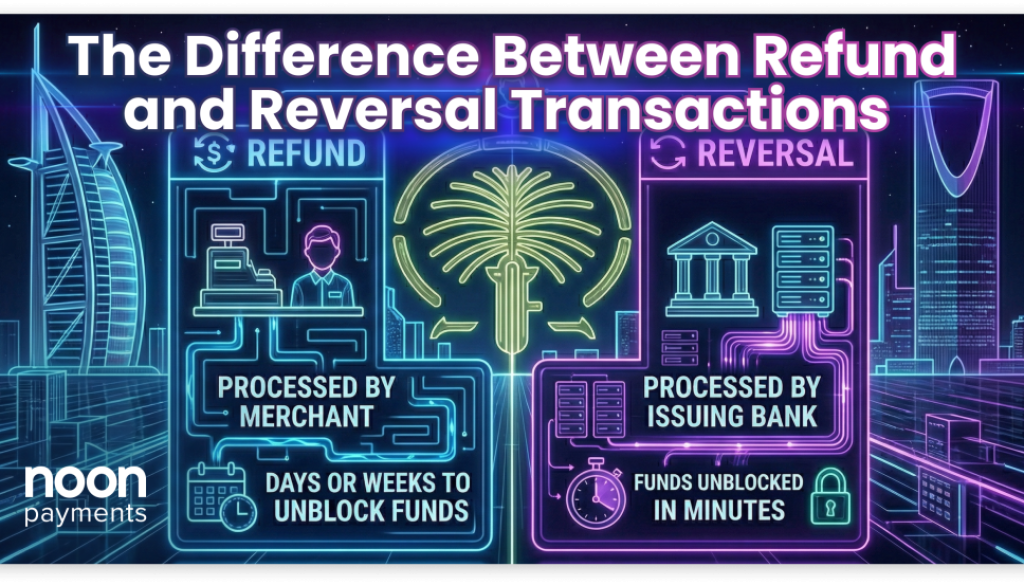
A refund transaction occurs after the original payment has been completed and settled. This means the money has already moved from the customer’s account to the merchant’s account—often through a payment gateway like noon payments.
Important Traits of Refunds
- Initiated after settlement
- Refund is a new, separate transaction
- Takes time to process (often up to 14 business days)
- The customer gets their money back after multiple systems communicate
For example: if a customer returns a product purchased through a store using noon payments, the merchant will issue a refund, which then begins a multi-step settlement refund process.
What Is a Reversal Transaction?
A reversal transaction occurs before that original payment is settled. In this case, the funds haven’t yet reached the merchant’s bank account.
Important Traits of Reversals
- Happens before settlement
- Stops the payment mid-journey
- The customer’s bank releases the funds quickly back to the customer
- No actual transfer ever finalizes to merchant
Think of it like canceling a payment just after authorization but before it becomes official.
Refund vs Reversal: The Core Difference
To understand the difference between a refund and a reversal transaction, focus on timing and movement of funds.
| Feature | Refund | Reversal |
| Settlement Status | After settlement | Before settlement |
| Money Reached Merchant? | Yes | No |
| Speed | Slower | Faster |
| Impact on Cash Flow | Yes | No |
Using noon payments, many merchants optimize by trying a reversal first, which cancels the authorization and gets money back to customers quicker.
Real-World Merchant Scenario
Suppose a customer buys from your online store in Saudi Arabia and pays via noon payments. Immediately afterward, they realize the item was ordered by mistake.
- If payment hasn’t settled yet: process a reversal
- If payment has already settled: issue a refund
Using the right method saves time and improves customer trust.
Why Timing Matters for Refund and Reversal Transactions
Merchants must track payment status closely. Once a payment is settled, funds are already credited to your account, meaning only a refund will work.
Reversals, in contrast, cancel the payment before settlement—saving time and avoiding complex financial flows. Especially for busy markets like UAE and Egypt, speed makes a difference.
Step-by-Step: How Refunds Work
Here’s how a refund typically flows:
- Customer pays for product/service
- Payment settles with the merchant
- Merchant issues refund via a gateway such as noon payments
- Bank and card issuer process the refund
- Customer’s balance is credited
Each step takes time and depends on bank policies.
Step-by-Step: How Reversals Work
Reversals follow a simpler flow:
- Customer initiates payment
- The transaction is authorized
- The merchant notices an issue before settlement
- Payment is reversed
- Customer’s funds are released immediately or quickly
Because the transaction never completed settlement, reversals are faster and easier.
Impact on Merchant Cash Flow
One of the biggest differences between refund and reversal transactions lies in cash flow.
- Refunds mean the merchant sends money back after settlement
- Reversals mean no money ever reaches the merchant’s bank
For small and medium businesses in KSA or Egypt, saving working capital by using reversals when possible is a real advantage.
Payment Errors and When to Use Reversals
Reversals are ideal when:
- A payment fails midway
- A customer cancels right after checkout
- A duplicate payment happens
- Authentication issues occur
Merchants using noon payments can often automate reversal checks to minimize manual work.
Refunds and Customer Experience
Customers often care only about speed. A reversal feels instantaneous compared to a refund, which might take multiple business days. Clear communication with customers about expected timelines builds trust.
How Banks and Card Networks Handle Refunds & Reversals
Every bank handles these processes differently. In the UAE and KSA, local banks may have faster interbank processes, but global card brands like Visa and Mastercard still govern timelines.
That’s why choosing a payment partner like noon payments with strong regional routing accelerates both refunds and reversals.
Common Mistakes Merchants Make
Many businesses mistakenly:
Issue refunds when a reversal would work
Delay identifying settlement status
Guess timelines instead of communicating them
Fail to synchronize systems (payment gateway + accounting)
Avoiding these errors increases trust and reduces disputes.
FAQ:
What is the difference between a refund and a reversal transaction?
Refunds happen after settlement; reversals happen before settlement.
Which is faster: refund or reversal?
Reversals are typically much faster.
Do reversals affect merchant cash flow?
No, because funds never reach the merchant.
Can all payments be reversed?
Only those not yet settled.
How long do refunds take in the UAE and KSA?
Refunds can take up to 14 days, depending on banks and networks.
Why should I prefer a reversal?
Reversals cost less time, reduce disputes, and improve customer satisfaction.
Get notified with blog updates